

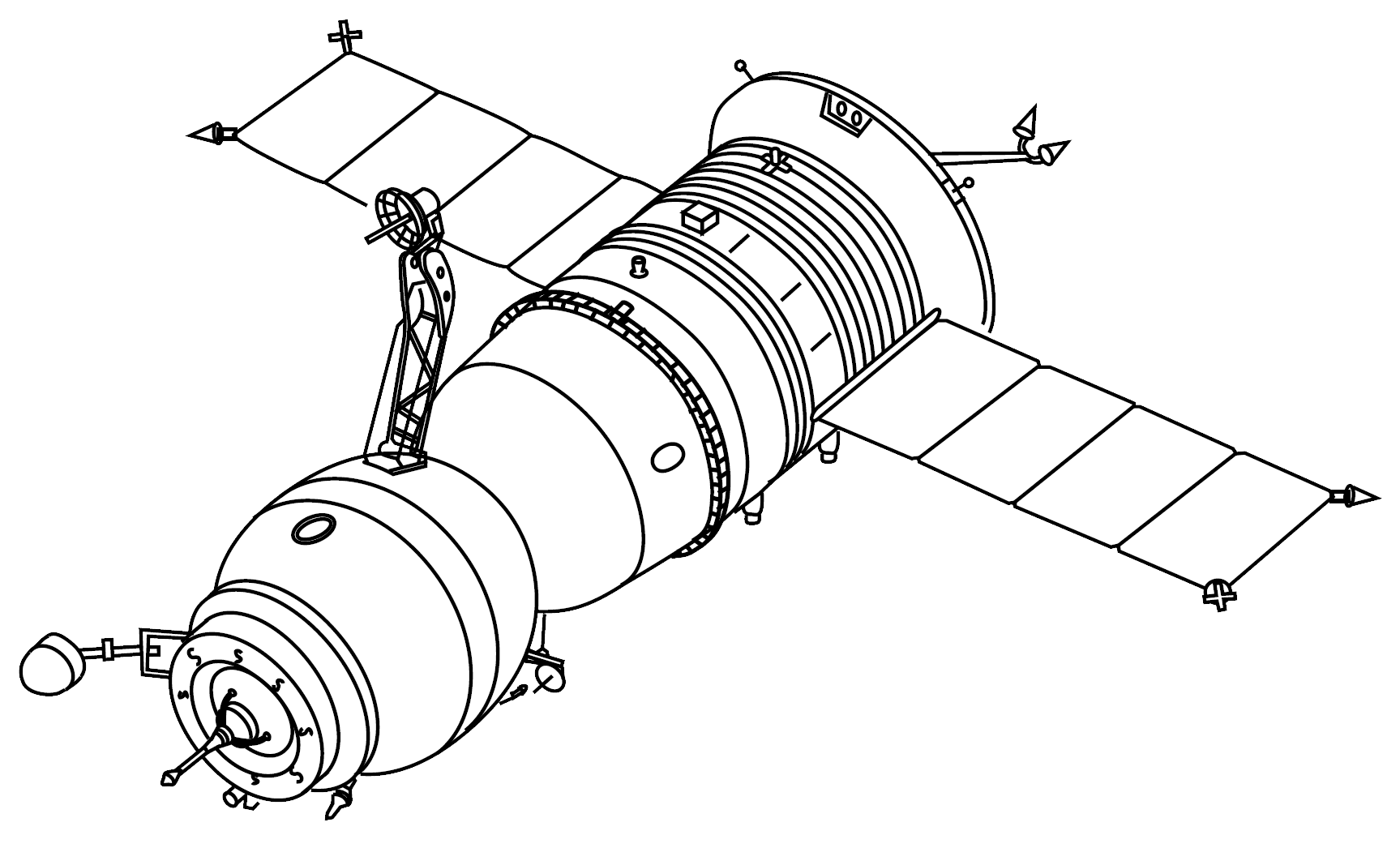
Soyuz T
 RUS Wikipedia

Built & Operated By
Russian Federal Space Agency (ROSCOSMOS)
Government · founded 1992
Maiden Flight
16 DEC 1979
Flight Life
120 days while docked
About
Soyuz is a series of spacecraft designed for the Soviet space programme by the Korolyov Design Bureau (now RKK Energia) in the 1960s that remains in service today. The Soyuz succeeded the Voskhod spacecraft and was originally built as part of the Soviet Manned Lunar programme. The Soyuz spacecraft is launched on a Soyuz rocket, the most frequently used and most reliable launch vehicle in the world to date. The Soyuz rocket design is based on the Vostok launcher, which in turn was based on the 8K74 or R-7A Semyorka, a Soviet intercontinental ballistic missile. All Soyuz spacecraft are launched from the Baikonur Cosmodrome in Kazakhstan.
Spacecraft Specifications
Height
7.48 m
Diameter
2 m
Crew Capacity
3
Rating
Human-rated
Capability
Manned and Cargo Salyut & Mir Logistics, Lifeboat
Operational History
The Soyuz-T was a major upgrade over previous Soyuz spacecraft, sporting solid-state electronics for the first time and a much more advanced onboard computer to help overcome the chronic docking problems that affected cosmonauts during space station missions. In addition, solar panels returned, allowing the Soyuz-T to fly up to 11 days independently as well as a redesigned propulsion system, the KTDU-426. Finally, it could at last carry three cosmonauts with pressure suits.